

How to Pour Self-Levelling Compound to Flatten Uneven Floors
The DIY Checklist:
What You’ll Need
1.
GEAR
(PPE)
Dust Mask (P2/FFP2 rating): Critical protection to stop airborne cement dust from getting into your lungs while opening and mixing dry powder bags.
Safety Glasses: Protects eyes completely from wet chemical compound splashes or flying dust particles during high-speed blending.
Spiked Shoes / Cleats: Strapped onto your footwear to allow you to walk directly through the poured wet compound without disrupting the level or leaving deep footprints.
Knee Pads: Provides necessary structural comfort and joint protection while working on raw subfloors for layout prep and spreading.
2.
EQUIPMENT
Heavy Duty Mixing Paddle Drill: A high-torque electric power drill fitted with a dedicated mixing paddle to blend the dense slurry smoothly without creating lumps.
Large Mixing Bucket: A large, heavy-duty bucket (typically 30 litres or larger) providing enough structural space to mix full bags of compound comfortably.
Measuring Jug: Essential for measuring clean, cold water down to the exact millilitre to prevent weak mixes.
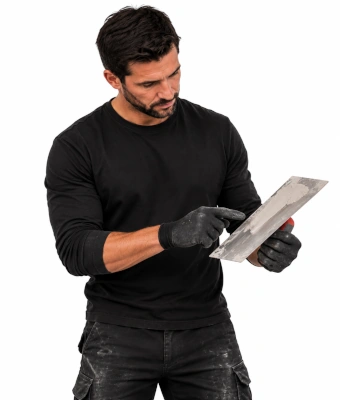
Steel Plastering Trowel: Used to gently guide the wet slurry into deep corners, low edges, and hard-to-reach boundaries.
Spiked Roller: A specialized roller rolling through the freshly poured wet floor to break trapped surface bubbles and ensure an airtight finish.
Soft Broom or Vacuum Cleaner: For clearing away all loose dirt, grit, and structural debris before applying any primer layers.
3.
Floor Self-Levelling Compound Powder Bags: Fast-setting cementitious compounds, usually supplied in standard 20kg or 25kg bags, providing the flat structural mass.
Acrylic Floor Primer: A specialized liquid coating that seals porous concrete floors, stopping the subfloor from stealing water from the wet mix.
Expanding Foam or Silicone Sealant: Used to plug deep cracks, pipe holes, or skirting gaps to stop the runny liquid compound from leaking away.
Weatherstripping / Foam Barrier Strips: Temporary foam borders installed around room boundaries to isolate the pour and create clean perimeter joints.
Clean Cold Water: Fresh, cold tap water used to trigger the self-levelling chemical flow matrix.
Step-by-Step DIY Installation Guide
STEP
01
STEP
02
STEP
03
STEP
04
STEP
05
STEP
06
STEP
07
Floor Levelling Project Calculator
Estimated Project Materials Required
• Powder Coverage Ratio: Calculated based on standard structural rules where roughly 1.7kg of dry powder covers 1 square metre of floor per 1mm of pour thickness.
• Primer Penetration Ratio: 1 standard litre of concentrated acrylic primer seals roughly 6 m² to 8 m² of porous masonry subfloor base.