
How to Paint and Protect Rusty Metal Gates & Railings

The Step-by-Step DIY Guide

The DIY Checklist:
What You’ll Need

Restoring metal ironwork adds massive value and visual appeal to a property entrance. Because Irish metal gates face constant driving rain, sea salt air, and damp conditions, rust forms quickly. To stop corrosion permanently and ensure your fresh topcoat bonds properly, you must prepare the surface completely using a robust multi-product basket approach.
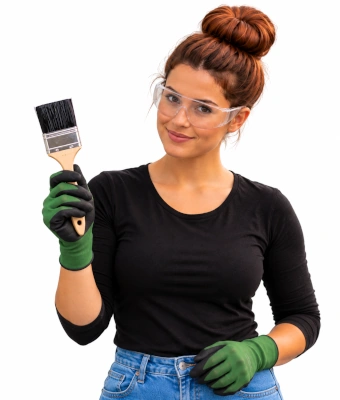
Lady holding a paintbrush to paint rusty metal gates and railings

1.

SAFETY
GEAR
(PPE)

Dust Mask (FFP2): Critical filter defense to avoid inhaling toxic old paint flakes, rust dust particles, or iron filings during heavy cleaning.

Safety Goggles: Essential impact eye protection against flying loose wire bristles and sharp rust shards thrown off by power tool attachments.

Chemical-Resistant Gloves (Nitrile): Protects hands against strong degreasers, acids in rust converters, and harsh mineral solvents.

2.

TOOLS &
EQUIPMENT

Wire Brush: Heavy-duty handheld steel wire brush to scrape off loose bubbling paint chunks and thick, scale-like rust patches.

Wire Wheel Drill Attachment: Fitted to an electric drill to quickly clear out stubborn corrosion pockets inside tight corners or scrollwork.

Specialized Round Metal Paintbrushes: Round bristle profiles carry more paint and hug curved iron rails, bars, and chains perfectly.

Paint Kettle or Small Container: To decant small amounts of paint, keeping the primary tin clean and free of rust debris.

Dust Sheets / Cardboard / Tarpaulin: Heavy ground coverings to safeguard driveways, concrete pillars, and surrounding plants from paint runs and black chemical drips.

3.

Materials, Fixings & Accessories

Degreaser / Sugar Soap & Sponge: Heavy detergent wash to strip away road grime, grease film, and bird droppings before painting.

Coarse Sandpaper / Emery Cloth: Flexible mesh or sheets used to scrub down remaining hard metal edges and profile surfaces.

Clean Cotton Rags: For wiping down loose grit and cleaning tools with mineral spirits.

Rust Converter Solution: A chemical formula that chemically reacts with remaining rust particles, neutralizing them into a stable, paintable surface.

Specialized Metal Primer: A corrosion-inhibiting undercoat layer that blocks future damp penetrations and provides an optimal anchor for topcoats.

Anti-Rust Metal Paint: Premium weather-shield topcoat paint formulated specifically to resist outdoor atmospheric moisture.

Masking Tape: Low-tack painters tape to protect wall edges, locks, and latch mechanisms.

Mineral Spirits / Thinners: For degreasing base surfaces, thinning oil-based paints, and cleaning bristle brushes.

Top Tip: Never Skip the Rust Converter Stage.
Wire brushing alone rarely removes microscopic rust spores buried deep inside pitted iron. If you paint directly over invisible rust, moisture will continue to breed underneath, causing your fresh topcoat to bubble and burst within months. Always brush a liquid rust converter over cleared zones to neutralize corrosion deep within the metal pores.
Top Tip: Paint the Hardest Parts First.
When working on decorative wrought iron gates, always use your specialized round metal brush to coat the internal corners, hinges, weld seams, and detailed scrollwork before painting the wide vertical bars. This prevents you from accidentally brushing against wet paint on flat surfaces while trying to reach awkward internal angles later.

Step-by-Step DIY Installation Guide

STEP

01

Ground Protection & Hardware Masking
Set Down Coverings:
Spread your heavy tarpaulins, cardboard blocks, or dust sheets fully underneath the gate structure. Secure them down with bricks to prevent Irish drafts from lifting them into wet paint tracks.
Tape Off Fixtures:
Use low-tack masking tape to completely seal latch bolts, lock openings, and decorative stone column boundaries from accidental splashes.

STEP

02

Scrape Away Loose Rust & Scaling Paint
Scrub Flaking Layers:
Put on your FFP2 dust mask, safety goggles, and nitrile gloves. Take your manual steel wire brush and aggressively scrape away all old bubbling paint coats and loose crusty rust scaling down to a stable base.
Clear Intricate Areas:
Fit your wire wheel drill attachment to your power drill driver. Run the spin velocity directly inside tight scroll curls and panel junctions until clean raw metal shows through.

STEP

03

Wash, Degrease & Sand Profiles
Scrub Grime:
Mix a concentrated bath of degreaser or sugar soap wash. Use a heavy sponge to scrub the entire metal frame clean of salt film, road oil, mud, and organic scale. Rinse with clean water.
Key the Surface:
Once fully dry, scrub the remaining sound paint tracks with coarse sandpaper or an emery cloth. This scratches the old slick skin, creating a rough texture that helps the fresh undercoat primer bond firmly. Wipe away the fine dust with a rag dipped in mineral spirits.

STEP

04

Treat Metal with Rust Converter
Apply Treatment:
Shake your rust converter liquid thoroughly and decant a small amount into a paint kettle. Brush it directly onto any remaining dark, pitted rust tracks.
Watch for Chemical Reaction:
Over 15 to 30 minutes, the liquid will turn from white to a dark blue-black hue, showing that the rust is being chemically neutralized. Allow it to cure fully for 3 to 4 hours before touching the surface.

STEP

05

Lay Down the Corrosion Inhibiting Primer
Apply Undercoat Base:
Stir your specialized metal primer paint thoroughly. Dip your round metal brush and apply an even, continuous primer layer across all bare ironwork and treated converter zones. Pay special attention to hidden horizontal undersides and hinge pins where rainwater tends to pool. Let it dry completely overnight.

STEP

06

Brush on the Protective Anti-Rust Topcoats
First Topcoat:
Stir your anti-rust metal paint finish tin. Dip your round metal brush roughly one-third into the paint. Apply the coating in smooth, even paths across the iron rails, working from the top down. Avoid overloading the brush to prevent runs and sagging droplets.
Second Topcoat:
Allow the first coat to dry for the time recommended on the tin (typically 8 to 16 hours). Apply a second continuous topcoat layer to ensure full coverage and long-term protection against the elements. Remove the masking tape once the paint is dry to the touch.
How to Paint and Protect Rusty Metal Gates & Railings: Irish DIY Guide

Metal Gate & Railings Paint Calculator

1. Define Gate/Railing Sections
Structure Location Label
Length (m)
Height (m)
2. Ironwork Profile Style & Layer Options
Metal Coating Workspace Preview

Estimated Basket Materials Required

Calculated Wireframe Area: 0.00 m²
Anti-Rust Topcoat Paint Needed: 0.00 Litres
Specialized Metal Primer: 0.00 Litres
Chemical Rust Converter: 0.00 Litres
Sugar Soap / Degreaser: 1 Pack
Coarse Sandpaper / Emery Pack: 1 Pack
Mineral Spirits Solvent: 1 Can (500ml)
Standard Metal Treatment Basket Yield Specs:
• Open Profile Area Math: Open rail area calculations auto-factor both the front and back surface faces of round or square bar picked profiles.
• Paint Yield Coverage: Metal primer and anti-rust gloss topcoat yields are calculated at a standard spread capacity of 10.0 square metres per litre per coat.


Get the Weekly Top Tip

Practical advice from real Topline store teams, straight to your inbox.

Locally

Owned,

Genuinely

Irish.

Contact Us
Amalgamated Hardware PLC
Trading as: Topline
Naas Industrial Estate,
Naas
Co. Kildare
W91P228

Email: info@topline.ie
Follow Us
© 2026 Amalgamated Hardware PLC. All rights reserved